
Streaming live channels, movies, and on-demand content in crisp Ultra HD has become one of the most popular ways to enjoy television, and 4K IPTV streaming on Hisense TV 2026 sits right at the center of that trend. Hisense has built a reputation for affordable yet capable smart televisions, many of which now ship with high-quality 4K panels, strong processors, and built-in app stores. When you combine that hardware with Internet Protocol Television (IPTV), you get a flexible setup that delivers thousands of channels and a huge library of video on demand without traditional cable wiring. This guide explains exactly how 4K IPTV streaming on Hisense TV works in 2026, how to set it up correctly, what apps and devices are compatible, and how to keep your stream smooth and legal.
IPTV, short for Internet Protocol Television, delivers TV content over an internet connection rather than through satellite dishes or coaxial cable. If you want a deeper technical background, the Wikipedia article on Internet Protocol television offers a solid overview. In this article, we focus specifically on getting the best possible Ultra HD experience on a Hisense television, whether you own a VIDAA-powered model, a Google TV model, or a Roku TV variant. We'll keep things neutral and practical, mention reputable services only as examples, and remind you to verify legality and content rights before subscribing to anything.
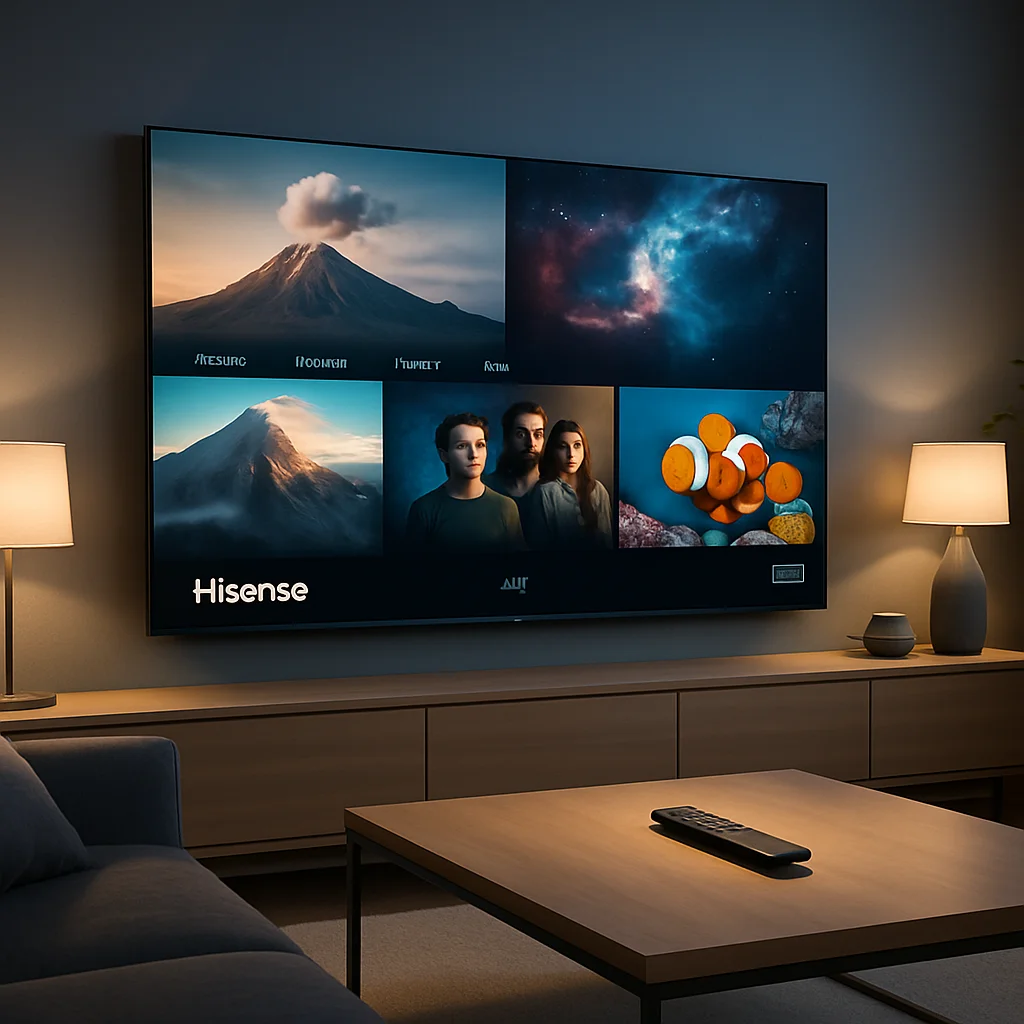
What Is 4K IPTV Streaming On Hisense TV 2026?
At its core, 4K IPTV streaming on Hisense TV 2026 means using an IPTV application or player on your Hisense smart television to watch content delivered over the internet at 3840 x 2160 resolution, also known as Ultra HD. Unlike standard broadcast TV, IPTV streams individual video data packets to your device on demand. This packet-based delivery is what allows you to pause, rewind, browse catch-up TV, and access huge on-demand libraries. The "4K" part refers to the resolution and the quality of the encoded stream, which requires both a capable display and a fast, stable connection.
Hisense televisions in 2026 run on a few different operating systems depending on the model and region. The most common is VIDAA, Hisense's own smart TV platform with its own app store. Some models use Google TV, which provides access to the Google Play Store, while certain North American models are Roku TVs or Fire TVs. Each platform handles IPTV apps slightly differently, but the underlying principle is the same: install a compatible player, enter your service credentials or playlist, and start streaming. Understanding which platform your TV uses is the first step toward a smooth setup.
How 4K IPTV Streaming Works
To appreciate how to optimize your experience, it helps to understand the journey your video takes from a server to your Hisense screen. An IPTV provider stores or relays channels and on-demand titles on its servers. When you open a channel, your TV requests that stream, and the server sends compressed video data over your internet connection. Your Hisense TV's processor decodes that data and renders it on the panel. For 4K content, the file sizes and bitrates are significantly larger than HD, which is why bandwidth and hardware matter so much.
Most modern IPTV services use adaptive bitrate streaming, a technology that automatically adjusts video quality based on your available bandwidth. This is the same approach used by mainstream platforms and is well documented in resources about adaptive bitrate streaming. When your connection is strong, you get the full 4K stream; when it dips, the service may temporarily lower resolution to prevent buffering. The codec used also affects performance. HEVC (H.265) is common for 4K because it compresses Ultra HD content more efficiently than older codecs, reducing the bandwidth needed without sacrificing image quality.
There are generally two ways IPTV content reaches your Hisense TV. The first is through a dedicated app provided by your service, which logs in with a username and password. The second is through a generic IPTV player that loads an M3U playlist or an Xtream Codes API. Both approaches can deliver 4K content, but the app experience is often more polished, with electronic program guides, categories, and favorites built in.
Key Features and Benefits
One of the biggest advantages of 4K IPTV streaming on a Hisense TV is the combination of picture quality and content variety. Here are the standout benefits that make this setup appealing in 2026:
- Ultra HD clarity: 4K resolution delivers four times the pixels of 1080p, producing sharper images, finer detail, and more lifelike color, especially on larger Hisense panels with HDR support.
- Massive content libraries: Quality IPTV services offer tens of thousands of live channels and large video-on-demand catalogs. For reference, providers such as SnopTV advertise 60,000+ live channels and 190,000+ movies and series with 4K Ultra HD options.
- No extra hardware required: Because Hisense smart TVs have built-in app stores, you often do not need an external streaming box. Everything runs natively on the television.
- On-demand flexibility: Pause, rewind, and catch-up features let you watch on your schedule rather than around fixed broadcast times.
- Sports and live events: IPTV is popular for live sports. If you follow specific leagues or events, guides like our LaLiga live streaming IPTV guide and best IPTV for World Cup streaming guide show how 4K streams elevate big matches.
- Cost flexibility: Many IPTV plans cost less than traditional cable bundles, with options to scale connections and duration.
It's worth noting that 4K delivery depends on the source content actually being available in Ultra HD. Not every channel or title is offered in 4K, so even on a capable Hisense TV, some content will display in HD or Full HD. A reputable service will clearly label which streams are true 4K.
Setup and Configuration
Setting up 4K IPTV streaming on your Hisense TV is straightforward once you know which platform your model runs. Below is a general walkthrough that applies to most Hisense televisions, followed by platform-specific notes.
Step 1: Connect to a Strong Network
Before installing anything, connect your Hisense TV to the internet. For 4K streaming, a wired Ethernet connection is ideal because it provides consistent throughput and low latency. If you must use Wi-Fi, connect to a 5 GHz network and place the TV close to your router. You'll want a download speed of at least 25 Mbps for stable single-stream 4K, with more headroom recommended if other devices share the connection.
Step 2: Update Your TV Software
Go into your Hisense settings and check for system updates. Running the latest firmware ensures the app store works correctly, security patches are applied, and codec support is current. This step is easy to skip but often prevents playback issues later.
Step 3: Install an IPTV App
On VIDAA models, open the VIDAA app store and search for a compatible IPTV player. On Google TV models, open the Google Play Store and search for a player that supports M3U or Xtream Codes. Many users choose well-known generic players, while some services provide their own branded apps. Install the app you intend to use.
Step 4: Enter Your Credentials or Playlist
Open the app and add your service. Depending on the provider, you'll either log in with a username, password, and server URL, or you'll paste an M3U playlist link. After loading, the app downloads the channel list and program guide. Give it a moment to populate, especially with large catalogs.
Step 5: Configure Quality Settings
Inside the app, look for a video or stream quality setting and select 4K or "auto" if available. Confirm that your Hisense display settings are set to allow the full Ultra HD signal. On some models, you may need to enable an "Enhanced" or "4K" HDMI/input mode, though for native apps this is usually automatic.
If you run into setup challenges specific to your device type, our broader resource on how to choose an IPTV provider covers what to look for, and platform-specific tutorials such as the IPTV iPhone setup guide can be useful if you also stream on mobile devices.
Device Compatibility
Hisense's lineup spans several operating systems, and knowing your model's platform helps you pick the right app and settings. Here's a breakdown of compatibility considerations for 4K IPTV streaming on Hisense TV in 2026.
VIDAA OS Models
VIDAA is Hisense's proprietary smart platform. It has its own app store with a growing selection of streaming and IPTV apps. VIDAA is lightweight and responsive, which is good for performance, but its app catalog is smaller than Google Play. If your preferred IPTV app isn't on the VIDAA store, you may need to use a generic player that's available, or consider an external streaming device.
Google TV Models
Hisense Google TV models give you full access to the Google Play Store, which means a wider variety of IPTV players and media apps. These models tend to offer the most flexibility. You can learn more about device support directly from Google TV support, which covers app installation and account management.
Roku TV and Fire TV Models
In some regions, Hisense sells Roku TV and Fire TV editions. Roku's channel store and Fire TV's Amazon Appstore each have their own selection of IPTV-compatible apps. Fire TV models, in particular, allow sideloading for advanced users, though that should only be done with legitimate apps and content.
External Streaming Devices
If your Hisense TV's built-in platform lacks the app you want, an external device can help. Popular options include streaming sticks and boxes that plug into an HDMI port. For example, advanced users sometimes pair their TV with an NVIDIA Shield, and our IPTV VPN setup for NVIDIA Shield guide walks through that configuration. Others compare smart TV brands; if you're weighing alternatives, our guide on watching live TV on TCL TV without cable offers a useful comparison point. For mini-PC enthusiasts, there's even a tutorial on watching live TV on a Raspberry Pi.
Whatever route you choose, confirm that the device and app both support HEVC decoding and 4K output, since these are essential for true Ultra HD playback.
Pricing and Plans
IPTV pricing varies widely depending on the provider, the size of the channel and VOD library, the number of simultaneous connections, and the subscription length. As a general rule, longer subscription terms cost less per month, and adding more connections increases the price. When comparing plans, look beyond the headline number and consider what's actually included in 4K, what support is offered, and whether a trial is available.
As a neutral example, services like SnopTV offer plans starting at $12.99 per month, with stronger value on longer commitments such as a 15-month plan that includes two connections, alongside 4K Ultra HD streaming and 24/7 human support. You can review the structure of typical IPTV pricing plans to understand how duration and connection count affect cost. Always compare at least two or three providers before committing, and prioritize transparency over the lowest possible price.
Many reputable services also offer a trial period so you can test 4K performance on your specific Hisense model before paying for a full term. Trials are especially valuable for verifying that the streams you care about are genuinely available in Ultra HD. Our free trial IPTV guide explains how trials typically work and what to evaluate during the test window.
Tips for Best Performance
Even with a capable Hisense TV and a quality service, a few practical habits make a big difference in 4K streaming quality. Use these tips to keep your experience smooth and reliable.
- Prioritize a wired connection: Ethernet is more stable than Wi-Fi for high-bitrate 4K streams. If wiring isn't possible, use the 5 GHz band and minimize obstacles between your TV and router.
- Check your real-world speed: Run a speed test on your network. For consistent 4K, aim for 25 Mbps or more per stream, with extra capacity if multiple devices are active.
- Reduce network congestion: Streaming 4K while other household members download large files can cause buffering. A modern router with Quality of Service settings can help prioritize your TV.
- Keep the app and firmware updated: Updates often improve codec support, stability, and security.
- Restart periodically: A weekly reboot of your TV and router clears memory and resolves minor glitches.
- Manage audio and video sync: If audio drifts out of step with video, our IPTV audio sync fix guide walks through common solutions.
- Troubleshoot freezes methodically: If a stream freezes, the issue could be the server, your connection, or the app. Our IPTV troubleshooting guide outlines a logical diagnostic process that applies broadly.
For mainstream tips on improving your overall streaming environment, the technology coverage at TechRadar's streaming section is a helpful, vendor-neutral reference for understanding bandwidth, codecs, and display settings.
Legal and Safety Checklist
Before subscribing to any IPTV service, it's important to confirm that the provider operates legally and respects content rights. IPTV technology itself is completely legal, but some services distribute content without proper licensing. Protect yourself by reviewing the checklist below.
| ✓ | Check | Why It Matters |
|---|---|---|
| ☐ | Service legality | Confirm the provider operates within the laws of your country and uses a legitimate business model. |
| ☐ | Content licensing and rights | Properly licensed services pay for the content they distribute; unlicensed streams can expose you to legal and security risks. |
| ☐ | Privacy and data handling | Review the provider's privacy policy to understand what personal data is collected and how it's protected. |
| ☐ | Secure payment methods | Use providers that offer trusted, encrypted payment options and avoid services that demand unusual or untraceable payments. |
| ☐ | Refund policy | A clear refund or trial policy signals confidence and gives you recourse if the service underdelivers. |
| ☐ | Transparent terms of service | Readable terms help you understand connection limits, restrictions, and acceptable use. |
If you stream while traveling or want added privacy, some users employ a VPN. Just remember that a VPN does not make unlicensed content legal; it only protects your connection privacy. Always choose services that respect copyright and consumer protection laws.
Common Use Cases for Hisense Owners
4K IPTV streaming appeals to many different types of viewers. Sports fans value reliable live channels for football, basketball, and combat sports; if you follow fights, our guide to watching boxing with IPTV shows how Ultra HD enhances those events. Movie lovers appreciate the large on-demand libraries that let them browse thousands of titles in one place. Families benefit from the flexibility of pause and catch-up features that fit around busy schedules. International viewers often choose IPTV specifically to access channels from their home regions that aren't available through local cable.
For Hisense owners specifically, the appeal is that the television does the heavy lifting natively. A good 4K panel with HDR and a capable processor can render Ultra HD streams beautifully without any added hardware cost. That combination of affordability and capability is a big reason Hisense models pair so well with IPTV in 2026.
Final Checklist Before Choosing
Before you commit to an IPTV service for your Hisense TV, run through this final checklist. It summarizes the most important factors to verify so you get reliable 4K performance and a trustworthy provider.
| ✓ | Check | Why It Matters |
|---|---|---|
| ☐ | Device compatibility | Confirm the app works on your Hisense platform (VIDAA, Google TV, Roku, or Fire TV) and supports 4K. |
| ☐ | Channel and VOD count | Make sure the library includes the channels and titles you actually watch. |
| ☐ | True 4K streaming quality | Verify which content is genuinely Ultra HD versus upscaled or HD only. |
| ☐ | Customer support | Look for responsive, ideally 24/7 human support to resolve issues quickly. |
| ☐ | Free trial availability | A trial lets you test 4K performance on your exact Hisense model before paying. |
| ☐ | Payment methods | Choose secure, recognizable payment options for peace of mind. |
| ☐ | Connection limits | Check how many simultaneous streams your plan allows for your household. |
| ☐ | Refund and cancellation terms | Understand your options if the service doesn't meet expectations. |
Frequently Asked Questions
Do I need an external device for 4K IPTV streaming on Hisense TV 2026?
In most cases, no. Modern Hisense smart TVs include an app store and the hardware needed to run IPTV apps natively. You only need an external streaming device if your preferred app isn't available on your TV's platform or if you want more processing power and features.
What internet speed do I need for 4K streaming?
For a single stable 4K stream, aim for at least 25 Mbps of consistent download speed. If multiple devices share your connection or you want extra reliability, more bandwidth helps. A wired Ethernet connection is preferable to Wi-Fi for high-bitrate streams.
Is IPTV legal to use on my Hisense TV?
The IPTV technology itself is legal. What matters is whether the specific service you use has proper licensing for the content it distributes. Always verify legality and content rights, and choose providers with transparent terms and secure payments.
Why does my 4K stream buffer or drop to lower quality?
Buffering usually relates to bandwidth limitations, network congestion, or server load. Adaptive bitrate streaming may lower quality automatically when your connection dips. Try a wired connection, reduce other network activity, and restart your TV and router. If problems persist, the issue may be on the provider's side.
Can I watch live sports in 4K on a Hisense TV?
Yes, provided the channel or event is offered in 4K by your service and your connection can sustain the bitrate. Not all sports broadcasts are produced in Ultra HD, so availability varies by event and provider.
Which Hisense platform is best for IPTV?
Google TV models generally offer the widest app selection through the Google Play Store, while VIDAA models are fast and efficient but have a smaller catalog. The best choice depends on which IPTV app you intend to use and whether it's available on your platform.
Conclusion
4K IPTV streaming on Hisense TV 2026 brings together capable, affordable hardware and the flexibility of internet-delivered television, making it an attractive option for viewers who want Ultra HD picture quality and a vast content library without traditional cable. The keys to a great experience are simple: know your TV's platform, use a strong and stable connection, install a compatible app, configure your quality settings, and choose a provider that operates legally with transparent terms and responsive support. Take advantage of trials to confirm that the channels and titles you care about truly stream in 4K on your specific model.
Before you subscribe, compare several services side by side, run through the legal and final checklists in this guide, and prioritize reliability and transparency over rock-bottom pricing. Reputable options such as SnopTV, with 4K Ultra HD streaming, large channel and VOD libraries, and 24/7 support, can be one of several choices you evaluate. To continue your research, explore the SnopTV homepage for a feature overview, review the available subscription plans, and read related setup guides so you can choose wisely and enjoy smooth, high-quality streaming on your Hisense TV.